
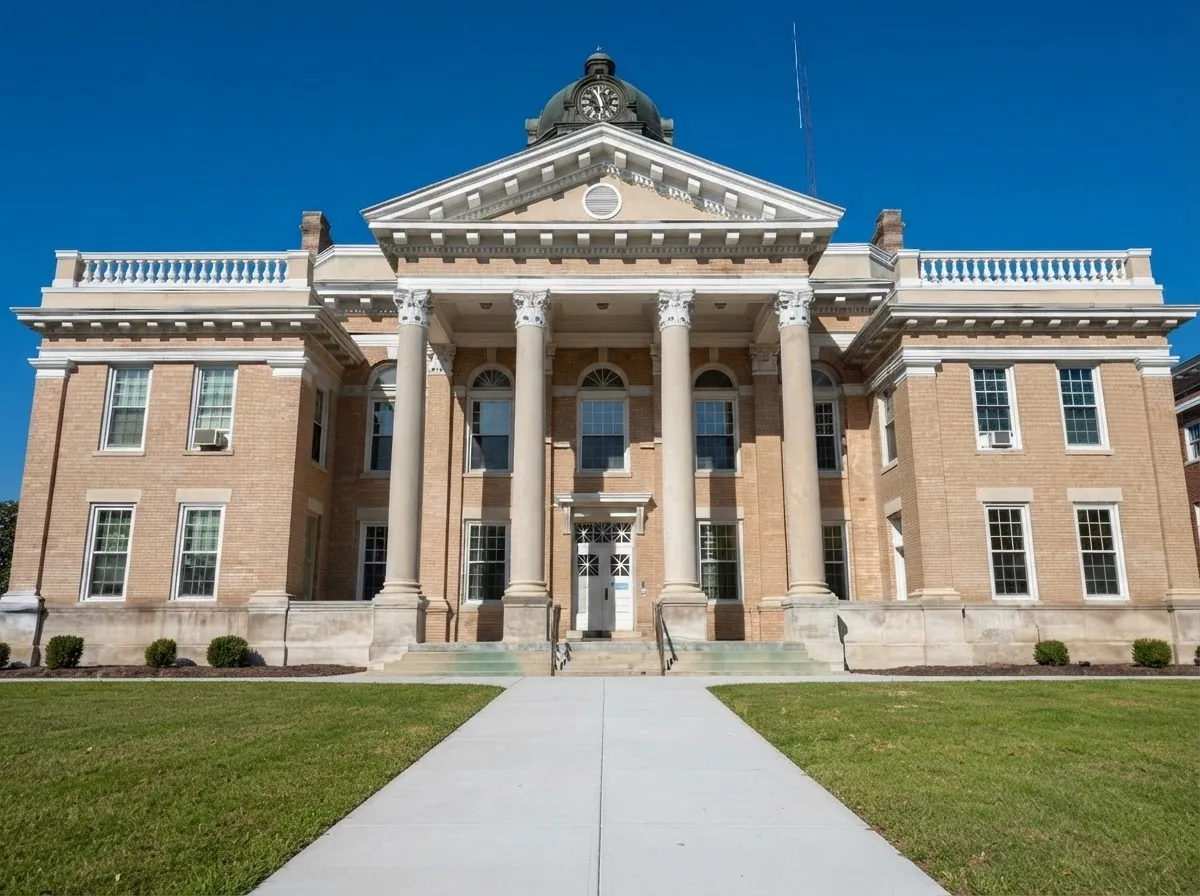
Court records in Halifax County, North Carolina, are maintained by the clerk of superior court and can be accessed through online tools, official court portals, and the clerk's office. HalifaxCourt.us can help you find publicly available court record information for Halifax County. You can also search for case details through the North Carolina Judicial Branch's Halifax County page, visit the clerk's office in person, or request court records through official state channels.
Halifax Court System Overview
Halifax County is part of North Carolina Judicial District 6, which also includes Northampton and Bertie counties. The district is served by both superior court and district court divisions, each handling different categories of cases. Superior court addresses felony criminal cases and higher-value civil disputes, while district court handles misdemeanors, infractions, small claims, and family law matters. Magistrates within the district court division issue warrants, set bail, and hear small claims cases.
The Halifax County Courthouse serves as the primary court facility:
Courts Serving Halifax
Several courts handle cases involving Halifax County residents:
Halifax County Superior Court
Halifax County District Court
Halifax County Magistrate's Office
U.S. District Court — Eastern District of North Carolina
Halifax County falls within the Eastern District of North Carolina. Federal civil and criminal cases are handled through this court.
U.S. Bankruptcy Court — Eastern District of North Carolina
What Types of Cases Halifax Courts Hear
Courts in Halifax County handle a broad range of case types across the superior court, district court, and magistrate divisions:
- Felony criminal cases
- Misdemeanor criminal cases
- Infractions (including traffic violations)
- Civil litigation (all dollar amounts)
- Small claims
- Family law — divorce, custody, child support, domestic violence protective orders
- Probate — estates, guardianships, conservatorships
- Juvenile matters — delinquency, abuse, neglect, dependency
- Adoptions and termination of parental rights
- DWI cases
The sections below explain which division handles each case type and how cases progress through the system.
District Court Cases in Halifax
Halifax County District Court hears misdemeanor criminal cases, infractions, juvenile matters, and all family law cases including divorce, custody, and domestic violence protective orders. District court also handles civil cases where the amount in controversy is $25,000 or less. A district court judge presides over these proceedings.
Superior court in Halifax handles felony criminal cases, civil cases exceeding $25,000, and appeals from district court. Felony cases typically begin with a magistrate issuing a warrant or a grand jury returning an indictment before the case moves to superior court. Cases are assigned to judges through the district's rotating schedule. Post-conviction motions and appeals from district court verdicts are also heard at the superior court level.
Magistrate Court Cases in Halifax
Magistrates in Halifax County perform several critical functions within the district court division. They conduct initial appearances, set conditions of release, and issue arrest warrants and search warrants. Magistrates also hear small claims cases.
Under North Carolina law, small claims jurisdiction covers civil disputes up to $10,000. Magistrates handle these cases in an informal proceeding without attorneys in many instances. Either party may appeal a magistrate's small claims decision to district court for a new trial.
Magistrates also accept guilty pleas for certain minor traffic infractions and worthless check cases. They are available around the clock for warrant requests and emergency matters such as involuntary commitment proceedings.
Family Law, Probate, and Juvenile Matters in Halifax
Family Law
Divorce, child custody, child support, equitable distribution, paternity, and domestic violence protective order cases are heard in Halifax County District Court. North Carolina requires a one-year separation period before an absolute divorce can be granted. Divorce certificates may be obtained from the clerk of court in Halifax or through NC Vital Records.
Probate
The clerk of superior court in Halifax County serves as the judge of probate. Estate administration, will probate, guardianship, and conservatorship matters are filed with and managed by the clerk's office. Interested parties can contact the clerk at the Halifax County Courthouse for information on filing estate documents.
Juvenile
Juvenile delinquency, abuse, neglect, and dependency cases are heard in district court. Juvenile court records are confidential under North Carolina law and are not available for public inspection. Halifax County has a Guardian ad Litem program that advocates for children in abuse and neglect proceedings — details are available through the Halifax County court information page.
How Cases Move Through the Halifax Court System
- Filing or initiation: Criminal cases begin with a magistrate's warrant, a citation, or a grand jury indictment. Civil cases start when a plaintiff files a complaint with the clerk. Family law and probate matters begin with a petition.
- Assignment: Cases are assigned to a judge based on the court's calendar and the rotating schedule for the judicial district.
- Initial hearing: Criminal defendants have a first appearance before a magistrate or district court judge, where charges are read and conditions of release are set. Civil cases receive a scheduling order or conference date.
- Pre-trial phase: Both sides exchange evidence through discovery. In criminal cases, plea negotiations may occur. Motions to dismiss, suppress evidence, or compel discovery are heard during this phase.
- Trial or resolution: Cases proceed to a bench trial or jury trial, or are resolved through a plea agreement, settlement, consent order, or default judgment.
- Post-judgment: Criminal cases may involve sentencing, probation, or appeal. Civil cases may involve enforcement of judgments, post-trial motions, or appeal to the North Carolina Court of Appeals.
Court Administration, Local Rules, and Public Access in Halifax
The courts in Halifax County are administered under Judicial District 6 by the senior resident superior court judge and the chief district court judge. A trial court administrator coordinates scheduling, staffing, and daily operations for the district.
Local rules governing practice in District 6 can be found through the North Carolina Judicial Branch website for Halifax County. These rules cover motion practice, calendaring, continuances, and other procedural requirements specific to the district.
Under North Carolina's public records laws, most court records are open to the public. You can access paper case files by visiting the clerk of superior court's office at the Halifax County Courthouse. The NC Judicial Branch public records request page explains which records are available and which agencies to contact. Exceptions to public access include juvenile records, sealed records, adoption files, and certain mental health proceedings.
Court hearings in Halifax County are generally open to the public. Contact the clerk's office at (252) 583-1621 to ask about specific hearing schedules or whether remote participation options are available for a particular case.
Court Records and Related Court Resources in Halifax
- Court case search: The North Carolina courts portal allows you to search for court dates and case information by name or case number for Halifax County.
- Obtaining court records: Paper case files can be viewed at the clerk's office. For copies or certified documents, visit the obtaining court records guide on the NC Judicial Branch site.
- Public records requests: For records not available online, you can submit a public records request to the appropriate office.
- Register of Deeds: The Halifax County Register of Deeds maintains land records, marriage licenses, birth and death certificates, and other recorded documents. The office is located at PO Box 67, Halifax, NC 27839.
- Vital records: Birth, death, marriage, and divorce certificates can be requested through NC Vital Records or the local register of deeds.
- Background checks: The North Carolina State Bureau of Investigation is the state's central repository for criminal history records and offers public background check services.
- Expungements: Information about having a criminal record expunged in North Carolina is available through the NCSBI expungements page.
- Offender search: The NC Department of Adult Correction offender search lets you look up current state prison inmates by name or offender ID.
- Department of Adult Correction public records: Requests for correctional records can be directed through the NC DAC public records contact page.
- Historical records: The NC State Archives holds historical Halifax County miscellaneous records including bills of sale, promissory notes, and other historical documents.
- Court forms and self-help: The NC Judicial Branch website provides court records help topics and downloadable forms for common filings.